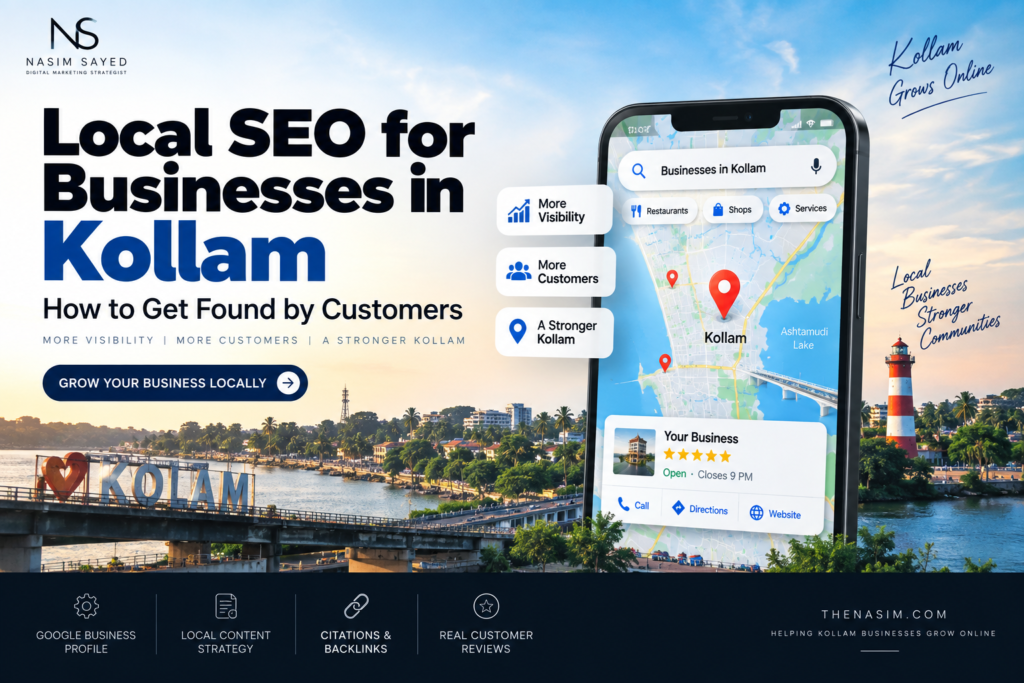
Local SEO for Businesses in Kollam SEO for Businesses, in Kollam: How to Get Found by Customers
If you own a small business in Kollam and feel like your shop or service is not visible online. . Even though you are doing everything right. You are not alone. I have worked with local business owners here, and almost every time the real problem is not a lack of effort. It is the basics that are missed in their local SEO strategy in Kollam. This is not a list that is copied from an SEO guide. It is based on what I have seen work. And fail. For real businesses trying to get found by customers who live just a few streets away. The One Thing That’s Always Wrong When a business owner in Kollam asks me why they are not visible on Google Maps or local search, the answer is rarely something strange. It is almost always a Google Business Profile that’s incomplete or not properly optimized. Weak local keywords, information, and very few real reviews. Think about it from Google’s point of view. If your profile does not clearly say what you do, where you are, and whether real customers trust you, Google has no reason to show you to someone searching nearby. Local SEO for businesses starts here, not with technical tricks. A Real Example: What Changed When SEO Basics Were Fixed A retail business in Kollam that I worked with made a few specific changes: Improved and completed their Google Business Profile Added location-focused content to their website Kept their business information consistent everywhere online Actively collected real customer reviews The result was that their Google Maps visibility improved and local inquiries increased. Nothing about this was fancy. The main change was simply making the business easier for Google. For customers. To understand it as a relevant, trustworthy local business in Kollam. This is the part most owners miss: local SEO is not about tricking an algorithm. It is about removing the confusion that keeps Google (and customers) from seeing you as a local option. A Mistake You Should Stop Making Today Here is one thing I would tell every business owner in Kollam to stop doing: keyword stuffing. Especially putting the word “Kollam” into every sentence, page title, and description in a forced way. This does not help your ranking. It makes your business look unprofessional to potential customers. Instead of stuffing keywords, use that time and energy for: A complete, accurate Google Business Profile Genuinely useful local content Consistent, correct business information Real reviews from real customers Search engines are much better at recognizing helpful content than forced keyword placement. And so are your customers. Where to Start This Week: A Step-by-Step Local SEO Plan If you only have time for one thing this week, start with your Google Business Profile. If you can do more, here is the order I suggest: Make your Google Business Profile shine. I recommend fixing the business name, picking the category, updating the phone number, writing the address, setting the hours, listing the services, and adding bright photos. Check your website. Make sure it clearly mentions your services and your Kollam location naturally, not forced. Fix NAP consistency. Your Name, Address and Phone number should be the same everywhere online. Get reviews. Ask recent customers for honest Google reviews. Do not fake it; local customers can tell. Add content. Publish one genuinely useful Kollam-focused article or page this week. Build citations. List your business on relevant, trustworthy local directories. Track your results. Watch Maps visibility, calls, website visits, and inquiries in your Google Business Profile dashboard. None of these steps need a budget. They need consistency. Local SEO Basics vs. Common Mistakes Do This of This Complete, accurate Google Business Profile; leaving fields blank or outdated. Natural mentions of your location; repeating “Kollam” unnaturally everywhere. Consistent NAP across all listings: Different address or phone formats on each site Genuine customer reviews: Fake or paid reviews Useful locally relevant content: Generic, copied content with no local value The True Purpose of SEO (Most Companies Ignore This) Here is something I believe not everyone in the field agrees on: local SEO is not about getting rankings. Local SEO is about being the trusted option for people who are nearby. Many companies in Kollam put a lot of work into keywords and rankings. They miss the things that create trust: reviews, correct details, helpful content, and a properly updated Google Business Profile. . Ranking is a result of trust, not the way around. Limitations to Keep in Mind SEO results vary depending on your industry, the competition, and how often you use these steps. A business with no online presence usually sees faster and more obvious improvements than one that is already doing the basics. Also, results from Google Business Profile changes usually take a week to appear. This is not something that happens overnight. Why Local SEO Matters for Kollam Businesses When someone searches for a product or service near them, they usually want a business they can contact or visit quickly. For example: If your business does not appear when potential customers make these searches, you may be losing customers even if your business offers a good product or service. Local SEO helps your business become more visible to people searching for products and services in your area. FAQs How long does local SEO take to show results in Kollam? Most businesses start seeing changes in SEO performance, Google Maps visibility, and inquiries within 4 to 8 weeks after applying the basics. How long does local SEO take to show results in Kollam? Most businesses start seeing changes in SEO performance, Google Maps visibility, and inquiries within 4 to 8 weeks after applying the basics. Profile optimization, reviews, and consistent information. Do I need a budget for local SEO? No. The important steps. Optimizing your Google Business Profile, fixing NAP consistency, and collecting real reviews. Cost nothing but time and effort. What is the single important local SEO factor for small businesses? A complete, accurate, and