
Meta Description: Learn what Generative Engine Optimization (GEO) really means in 2026, how it is different from SEO and a simple 5-step plan to make your content understood by AI search.
URL Slug: generative-engine-optimization geo 2026
Generative Engine Optimization (GEO): The 2026 Trend Every Marketer Needs to Know
If you have noticed your website traffic change even though your rankings look okay, you are not mistaken. Over the past year, I have been testing how content works on ChatGPT, Perplexity, and Google’s AI Overviews as part of my SEO work. The pattern is clear. People are not typing three keywords into a search box anymore. They are asking questions and expecting a full answer right away.
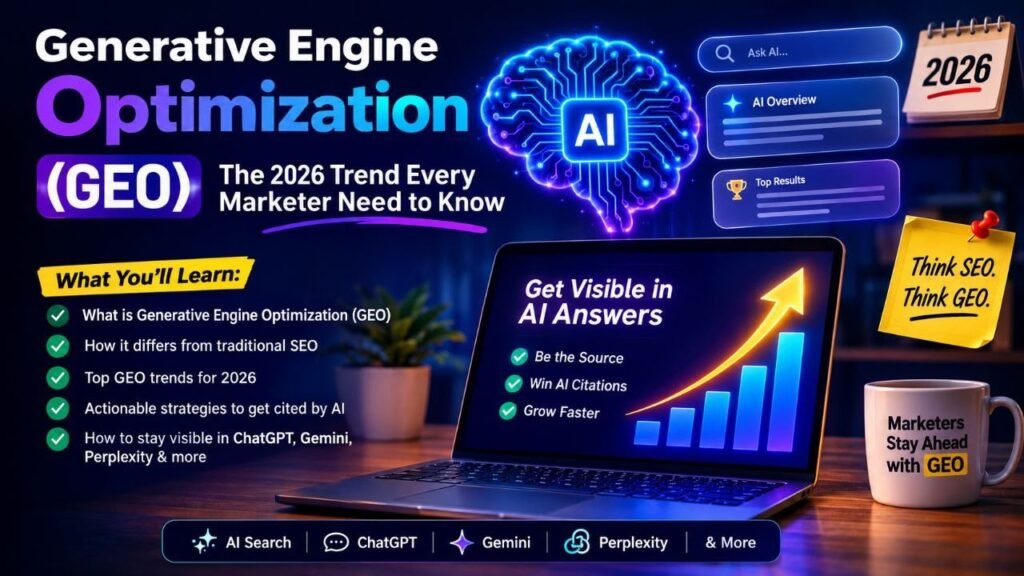
This change has a name: Generative Engine Optimization (GEO). The process of making sure your content is understood. Cited by AI search systems, not just ranked in a list of links.
What Is Generative Engine Optimization (GEO)
GEO is about being understood, mentioned, and referenced by AI-powered search tools. Instead of working to rank high, you work to make sure an AI system can pull an accurate answer from your content. That it trusts your page enough to use it.
One thing I have noticed while testing this on platforms: the same brand doesn’t always show up the same on every AI tool. ChatGPT, Perplexity, and Google AI Overviews all seem to use sources and signals. That alone shows that traditional SEO is not enough anymore. Visibility now has more than one layer.
GEO vs SEO: What’s the Real Difference?
Generative Engine OPtimization
Goal Rank in search results Be understood, mentioned and cited by AI
Optimizes for Keywords, backlinks crawlability Context, clarity, authority, extractable answers
Success looks like Top 1 to 3 positions on Google Being the source that an AI answer uses
Foundation Web ecosystem signals Same web ecosystem read differently by AI
My opinion after working with both: SEO is about being found. GEO is about being understood, mentioned, and cited. They are not enemies. GEO builds on top of SEO; it does not replace it. Google itself has said that its main SEO advice still applies to how its generative search features work, which matches what I have seen in practice.
A Real Example: What Changed When I Applied Generative engine optimization
On one of my SEO articles, I changed the content to help AI systems take more from it. Here is what I did:
Changed long paragraphs into question-based H2s
Added a answer at the start of each section
Broke content into bullet points and short paragraphs
Added a FAQ section
Added links and relevant Article FAQ schema
The aim was to make each section work as a standalone answer, not just part of an article.
After the changes, the content started doing well for searches and began showing up more often in AI-generated results. I want to be honest, I wouldn’t say schema alone caused that change. AI visibility also depends a lot on content quality, authority, and how easy it is to crawl. The structure change clearly helped.
My 5-Step GEO Framework
This is the process I use whenever I optimize a piece of content for AI search.
1. Search intent Find out what question your audience is asking.
2. Answer first. Answer at the top of the section before adding more details.
3. Structure. Use headings, paragraphs, bullet points, FAQs, and clearly separated sections.
4. . Context. Add thoughts, real examples, numbers, and internal or external links to sources.
5. Technical SEO. Check schema markup, how easy it is to crawl, page speed, titles, and meta descriptions.
After publishing, I test the topic on ChatGPT, Perplexity, and Google AI search to see how the content is used. Whether the brand appears.
My main rule: make it easy to read easy to understand for search engines and easy for AI systems to get answers from.
The Biggest Mistake Marketers Make With Generative engine optimization
The mistake I see often is that marketers try to “trick” AI search by improving their content. Putting in keywords, making many similar pages, or adding schema without making the content actually useful.
My advice: create content for people not for AI. Make sure the content is good the structure is clean the answers are direct the expertise is clear. The information is truly unique. Google’s current advice says the same thing. It rewards content that is made for people, not for shortcuts in AEO or GEO.
Limitations of Generative engine optimization (Where It Won’t Save You)
Generative engine optimization is still not fully predictable. Different AI platforms use different sources. What gets cited can change over time. I wouldn’t tell a client, “do these five GEO tactics, and you will show up in ChatGPT”. That is not honest.
I would also be careful to suggest GEO as a fix for businesses that rely heavily on:
– intent (a plumber, salon or clinic)
– Transactional real-time information (prices, availability, bookings)
For those, GEO can help with visibility. It can’t take the place of strong local SEO, correct business listings, reviews, technical SEO, and a good conversion-focused website.
FAQ
Is GEO replacing SEO?
No. GEO builds on the basics of SEO. Crawlability, authority, and good content. Than replacing them.
Do I need schema markup for GEO?
It helps. It is not a fix. Schema helps AI understand. It doesn’t take the place of original, well-structured content.
How long does it take to see GEO results?
There is no timeline, and results can be different on each platform. Since AI search tools pull from sources, visibility can be unstable after good optimization.
Does GEO work for businesses?
It can help with visibility, but local businesses still need SEO, correct listings, and reviews. GEO alone will not fix that.
Build SEO First, GEO on Top
Generative Engine Optimization is becoming a part of search marketing. It is not a replacement for SEO. The companies that will do well here are the ones making content that’s helpful, well-structured, and made for people first, then adding the structure and technical work that helps AI systems understand and use it correctly.
If you are just starting, don’t change your site. Pick 2 to 3 of your pages, restructure them using the 5-step plan above, and test how they appear on ChatGPT, Perplexity, and Google AI search. That is a way to start.
Conclusion
Generative Engine Optimization is changing how marketers look at search visibility.. Geo does not replace SEO. Give quick fixes to fool AI systems. Instead GEO helps make valuable content easier for both people and AI‑powered search engines to understand, trust and use.
build SEO foundations create useful content structure the content clearly demonstrate real expertise and then optimize for AI visibility.
As AI search keeps evolving no single GEO tactic guarantees visibility or citations. What stays valuable is content that answers questions offers insights and gives users a reason to trust the source. Strong content is the foundation of SEO and the key, to Generative engine optimization
SEO gets you discovered. GEO helps you get understood. The future of search will require both.